The Second Failure: Cleaning the Oil System After a Liner Lets Go
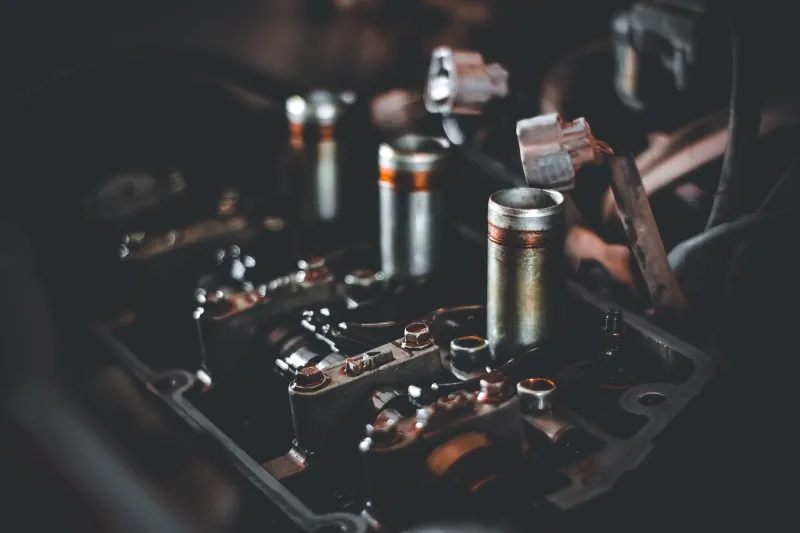
There's a moment in every liner rebuild where the block looks finished. New sleeves are seated, the deck is skimmed, the crank is back in. It's tempting to call it a day. But if the engine got to this bench because a liner failed — cracked, cavitated, or simply lost its seal — then the bore was only the first casualty. The oil system has been quietly collecting the evidence for however many hundreds of miles it took you to notice.
We've seen freshly rebuilt engines come back at under a thousand miles with polished bearings and a knocking crank, and in almost every case the sump had been wiped out but the galleries hadn't. This is the part of the job that gets skipped because it's dirty, slow and invisible on the invoice.
Three kinds of contamination, three different problems
It helps to separate what's actually in there.
Abrasive particulate. Liner material, hone grit, gasket residue, and the fine cast-iron dust that comes off a scuffed bore. These are hard particles in the 5–40 micron range, which is precisely the size band that slips past a filter on cold start-up and embeds in bearing shells.
Coolant. A failed wet-liner seal means OAT coolant has been meeting hot oil for a while. The result is an emulsion that turns to a brown mayonnaise in the cooler and the rocker cover, and glycol that attacks white metal once it gets hot enough.
Soft bearing metal. Once the crank has run on contaminated oil, the shells start shedding lead, tin and copper. That material is soft, it plates onto gallery walls, and it will happily migrate into the next set of bearings you fit.
Strip the block properly, not partially
You cannot clean main oil galleries with the crank in place. Full stop. The oil pump, pick-up, filter housing, dipstick tube and every gallery plug come off, and the block goes on the stand.
Gallery plugs are the bit people skip. On a lot of the engines that come through UK workshops — Ford's 1.6 and 2.2 Duratorq, the Vauxhall 1.9 family, VAG's PD and CR diesels — there are four to six of them, usually hex or Torx, often tucked behind the alternator bracket or under a core plug. Heat, penetrating oil, a proper impact driver, and patience. If one rounds, drill and tap it rather than leaving it in and hoping.
While you're there, pull the oil pressure relief valve and the bypass, and check the little non-return valve in the filter housing. Both are debris traps.
The flush: volume and direction, not magic potions
A parts washer pump or a cheap 12V transfer pump, a reservoir of paraffin or a dedicated flushing fluid, a flexible lance, and a big catch tray. That's the rig. No expensive aerosol 'engine flush' product is going to shift packed swarf out of a gallery gallery that's 6mm across.
Work in both directions. Flush from the front gallery forwards with the rear plugs out, then reverse the lance and push back the other way — debris collects in the dead ends and the drillings that feed the main bearings. Pay particular attention to the cross-drillings to the cam bearings and the feed to the timing chain tensioner, which is a known silting point on older engines.
Then hot soapy water through the same route, a demineralised water rinse, and immediate drying with compressed air followed by a spell on the hot tank or in front of a heater. Flash rust forms within minutes on a bare, washed block — a light wipe of oil on the machined surfaces straight after drying is not cheating.
Oil coolers: the honest answer is usually 'replace it'
Stacked-plate and plate-and-fin coolers cannot be verified clean. You can flush them, you can reverse-flush them, you can put them on a rig and flow them — and you still won't know whether a pocket of swarf is sitting in a corner waiting for the first hot motorway run. A new cooler for a Transit or a Passat is typically £80–£150. A set of big-end shells and a crank regrind is not.
Tube-and-shell coolers can sometimes be cleaned and pressure-tested with more confidence, but only if you can get a borescope down the tubes and prove the flow is even. If in doubt, bin it. This is the single most common 'I cleaned it' that comes back to bite people.
Turbo feed and return lines
Replace braided turbo feed lines rather than rinsing them — they're cheap and the internal braid holds debris like a scouring pad. Banjo bolts with integral filter screens are another trap; either replace the bolt or remove and clean the screen properly, then check it again after the first 50 miles. The return line to the sump should be rodded through, not just flushed.
Pump, pick-up and the filter you cut open
Strip the oil pump and measure the rotor or gear clearances against spec. Any build that has seen debris gets a new pump — no debate, and no reusing a pump that's been run on emulsion either.
On first start-up, fit a cheap filter, not the good one. Run the engine up to temperature, let it cool, then cut the filter open with a hacksaw, spread the pleats and look for glitter with a torch. A little fine grey paste is normal bedding-in. Distinct metallic flakes are not, and they mean you stop and investigate before the next hundred miles.
Sample checkpoints after the rebuild
Three samples, taken properly from a hot engine after a run, mid-stream:
- 50 miles — a baseline dirt check. Expect elevated silicon from sealants and assembly lubes. Watch iron, and watch potassium and sodium as coolant markers.
- 500 miles — the trend line matters more than the absolute numbers here. Iron should be falling. Copper and lead should be stable and low.
- 1,500 miles — the confirmation sample. If copper or lead has climbed between samples, you have a bearing problem developing and the sump needs to come off.
Use a proper lab with a UK turnaround — most will email a report within a few working days — and keep the reports in the rebuild file. They're worth real money at resale, and worth even more if you ever have to argue a warranty.
The bore gets the glory. The galleries decide whether the rebuild lasts.