Coolant Migraine: Catching Wet-Liner Seal Failure Before It Wrecks the Block
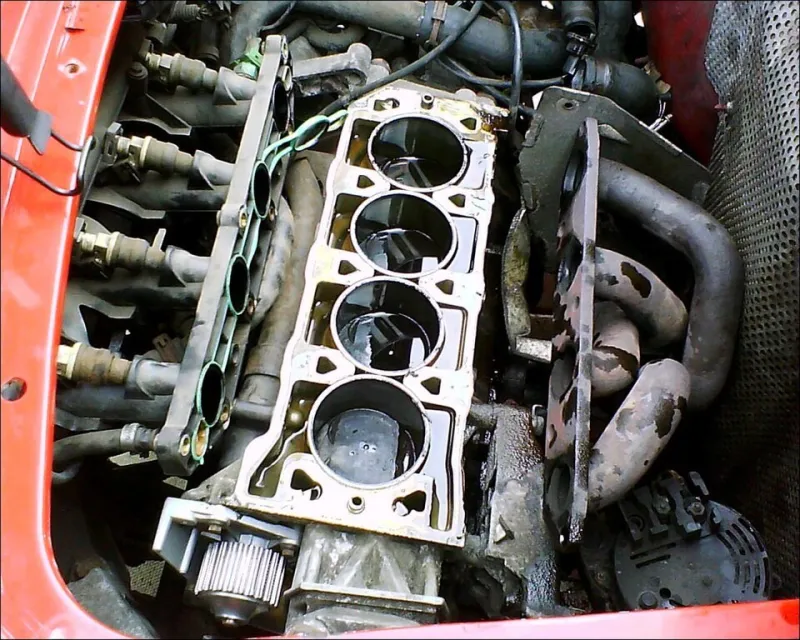
Photo: Nibi, Public domain, via Wikimedia Commons
Wet liners are brilliant when they seal and miserable when they do not. The liner sits directly in the coolant jacket, held in place by the head and sealed at the bottom by O-rings or seal rings. When those seals start to fail, coolant can creep into places it has no business being: the sump, the combustion chamber, the oil gallery or the outside world. The early symptoms are easy to dismiss as a tired cap, a weeping hose or a bit of condensation. In a UK workshop, that is exactly how a cheap fix turns into a ruined block.
Why wet-liner seals fail
Seal failure is usually a combination of age, heat, corrosion and movement. The O-ring hardens, flattens or gets nicked during fitting. The liner seat in the block corrodes and no longer gives the seal a clean surface to sit on. Liner protrusion is wrong, so the head gasket cannot clamp the liner properly. The coolant is past its best, the inhibitors are depleted, or the mix is wrong and the seal sees more corrosion than it should. Overheating and a weak pressure cap can finish the job.
Early warning signs
Unexplained coolant loss is the classic first clue. There is no puddle under the car, no obvious stain on the driveway, but the expansion tank keeps dropping. Hoses that stay hard after the engine has cooled can suggest combustion gas is pressurising the system. Bubbles in the expansion tank while the engine runs are another red flag. So is a cold-start misfire that clears, a puff of white vapour from the exhaust, or a heater that blows hot and cold for no obvious reason.
Oil emulsion is the symptom everyone remembers, but mayonnaise under the oil cap can also be short-trip condensation, especially in a UK winter. Do not condemn the engine on that alone. Look at the dipstick, the rocker cover and the oil drain. A proper emulsion that coats surfaces and rises up the dipstick is different from a bit of cream under the cap. Coolant dye can help trace a slow leak, and a combustion gas tester in the header tank is a useful confirmatory check.
Cold pressure testing
A cold pressure test is one of the most useful checks you can do before the engine is hot and everything is expanding. Pressurise the cooling system to the cap rating, no more, and watch for a drop. Leave it long enough to be meaningful. Then inspect the liner seals from underneath with a torch, look at the block drain, core plugs, hose joints and the water pump area. An endoscope can be handy around the base of the liners if access is tight. If the system holds pressure cold but loses it hot, combustion pressure may be entering the system.
Liner protrusion and seal seating
When the head is off, measure liner protrusion properly. Use a dial gauge or a straight edge and feeler gauges, and follow the manufacturer's specification for your engine. Too little protrusion means the head gasket cannot clamp the liner and seal correctly. Too much can distort the head or crush the gasket. Check the liner seat in the block for pitting, corrosion and old seal material. The O-ring groove on the liner must be clean and free of burrs. Fit the correct seals with the correct lubricant, and do not roll or twist them during installation. A seal that looks fine but sits proud will not last.
Antifreeze concentration for UK weather
British temperature swings are not extreme by global standards, but they are enough to punish a weak coolant mix. Use the correct antifreeze type for the engine and the correct concentration, usually around 50/50 for protection and inhibitor life unless the manufacturer says otherwise. Do not top up with neat water all year and assume it will be fine. Check the freeze point with a refractometer and check the pH if you have the kit. Mixing incompatible coolants can drop inhibitors out of suspension and leave seals and alloy components exposed. If the coolant is old, dirty or the wrong colour, drain, flush and refill with the right stuff.
Do not mistake condensation for a dead engine
Short school runs, damp mornings and cold starts can create condensation that looks alarming. A proper diagnosis matters. Pressure test, combustion gas test, oil condition and liner protrusion checks tell you far more than a glance under the cap. If you do find coolant in the oil, stop driving. Coolant is a poor lubricant and a good way to turn a seal job into a crank and bearing job. Catch it early, and a wet-liner seal refresh can be a straightforward piece of engine rebuilding rather than a block replacement.