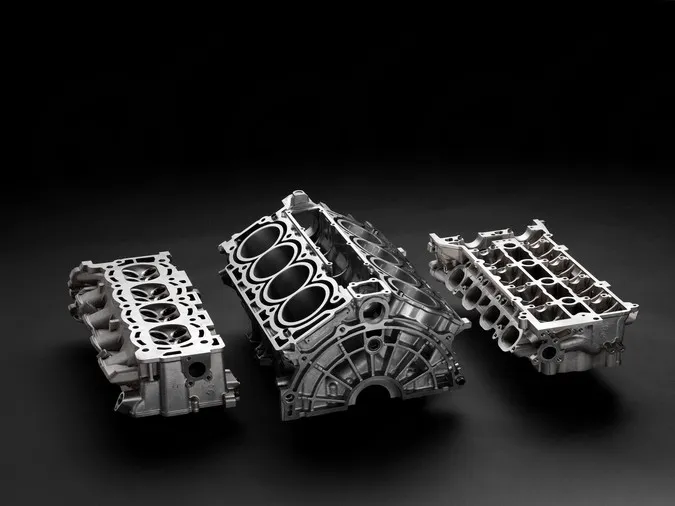
Liner Logic: Matching Wet, Dry and Flanged Cylinders to Your Next UK Build
Photo: Valtra Tractors, CC0, via Wikimedia Commons
Ask ten UK engine builders about liners and you will get ten opinions, usually delivered over a mug of tea and a bore gauge. The truth is simpler: wet, dry and flanged liners are three different answers to three different problems. Pick the right one and a tired block comes back to life; pick the wrong one and you will be chasing coolant leaks, bore distortion or a head gasket that never quite seals.
Wet liners: coolant on the outside
A wet liner is exactly what it says on the box. The outside of the liner is in direct contact with coolant, so the block casting does not need to form the cylinder wall itself. Sealing is handled by O-rings or seals at the bottom and the head gasket at the top. You will find wet liners in plenty of diesel families, including Perkins-based four-pots and several Land Rover and commercial units, plus a fair few competition blocks where easy replacement is part of the design.
The upside is heat transfer and serviceability. The downside is that you have created a water jacket with a removable wall, and every seal is a potential leak. Typical failure symptoms include mayonnaise under the oil filler cap, unexplained coolant loss, white smoke from the exhaust, a weep at the block face or pitting on the liner exterior. If the engine has been run with weak coolant, the outside of the liner can corrode badly enough to pit through.
Installation checks matter more than the liner brand. Check liner protrusion above the deck, clean the O-ring grooves until they are spotless, use the correct seal lubricant and clamp the liner down in the right sequence. A pressure test before the head goes on is cheap insurance. On the machining side, a UK specialist will often clean up the counterbore, check deck height and hone with a torque plate fitted so the bore is round once the head is torqued down.
Dry liners: pressed into a solid parent bore
A dry liner never sees coolant. It is pressed or shrunk into a parent bore in the block, and the block casting still does the structural work. This is common in aluminium blocks. The Rover V8 is the obvious British example, and several modern turbo fours and imported performance units use the same idea. The liner is usually a thin-wall iron sleeve in an aluminium casting.
The advantage is rigidity and no coolant seals to fail. The disadvantage is heat path and wall thickness. A dry liner can suffer bore wear, liner slip, cracking or hot spots if the block has been overheated or decked incorrectly. Oil consumption, blow-by and a scuffed bore are the usual clues. On a Rover V8, a slipped or cracked liner is a known risk when these engines have had a hard life, especially if the cooling system has been neglected.
Installation is all about interference fit and bore preparation. The parent bore needs to be round, straight and finished correctly, and the liner needs the right step or flange if it is a top-hat design. Machining work usually includes boring the parent block true, fitting the liner, honing after fitting, skimming the deck and checking liner protrusion. Do not assume a dry liner is a fit-and-forget part; it still needs a proper torque-plate hone if you want rings to seal.
Flanged liners: the belt-and-braces option
Flanged liners, often called top-hat liners, have a lip at the top that sits in a counterbore in the block. That flange stops the liner moving downward and helps locate it under load. They are popular in high-boost builds, siamese-bore repairs and blocks where the original liner seat has been damaged. In a competition engine, a flanged liner is often the difference between a rebuildable block and a paperweight.
Failure symptoms tend to be more dramatic: a cracked flange seat, a head gasket that will not seal, coolant pressurisation or a liner cracking at the radius. Installation checks include making sure the flange seat is cut square, protrusion is consistent around the circumference and there is a proper radius relief so the liner does not crack at the step. Head gasket compatibility matters too, especially on engines with narrow fire rings.
Machining is where flanged liners earn their keep. The counterbore needs to be accurate, the deck surface needs to be flat and the bore should be honed with a torque plate. A pressure test after assembly is standard practice. If the block has been welded or has had previous liner work, a crack test and sonic check are worth doing before you spend money on a fancy liner kit.
Matching the liner to the build
For a classic restoration, originality and sensible cost usually win. A dry liner in an aluminium block keeps the original casting, while a wet-liner diesel can often be rebuilt with new seals and liners rather than hunting for a complete engine. For fast-road use, the decision often comes down to heat and boost. Once you start adding forced induction, a flanged liner and a proper torque-plate hone become much easier to justify.
Competition builds are their own world. Here, liner choice is part of the engine design, not a repair afterthought. You need to think about bore spacing, water jacket integrity, head gasket sealing and how much power you are asking the block to take. UK climate adds another variable: corrosion. A car that sits damp for months can suffer coolant-side pitting that never shows up until the engine is apart.
Checks before the block goes back together
Before committing, check the block for cracks, deck flatness, bore roundness and liner protrusion. Look at surface finish, not just bore size. Cleanliness is free; comebacks are not. Fit a torque plate for the final hone if the engine is worth the effort, and pressure test anything with a wet liner or a repaired liner seat. At Cyl-Liners UK, the workshop answer is usually the same: measure twice, machine once and do not let a cheap liner kit hide a tired block.
Get those basics right and the liner type becomes what it should be: a deliberate engineering choice, not a lucky dip.