Corroded In, Coaxed Out: Freeing Stubborn Wet Liners Without Wrecking the Block
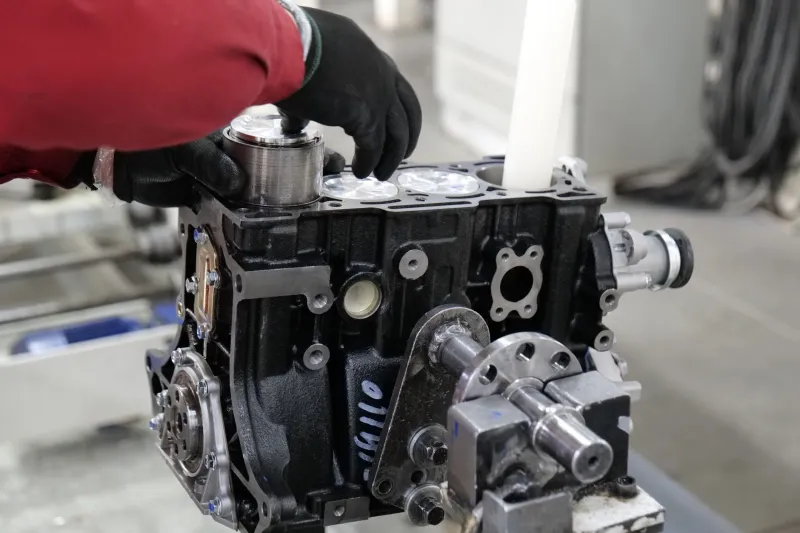
Wet liners have a reputation for sliding out with a satisfying thunk. That reputation survives right up until you meet a block that has spent thirty years in a damp UK garage with nothing but tired coolant for company. Then the liner and parent bore become a single corrosion assembly, and every shortcut starts to look like a crack waiting to happen.
The good news is that most seized wet liners can be removed without destroying the block. The bad news is that the job rewards patience far more than brute force. If you are working on a rare casting, a matching-numbers engine or anything where a replacement block is made of unobtainium, treat extraction as a precision operation rather than a demolition derby.
First, work out what you are actually fighting
A liner that will not move is not always rusted solid. It may be held by hard scale in the parent bore, by old sealant, by a deformed O-ring, or by corrosion around the top flange. Some engines also use a shoulder or counterbore that traps debris. Before you reach for a puller, drain the coolant, strip the block as bare as practical and clean the deck area properly. You want to see what is holding the liner, not spread old sludge around.
If the liner moves even a fraction, stop and think. A liner that shifts a millimetre and then locks may be catching on a ridge of scale. Pulling harder at that point is how flanges get distorted and castings get cracked.
Puller setups that pull straight
A proper wet-liner puller is worth its weight in good blocks. The usual setup is a bridge plate across the deck, using existing head-bolt holes or dedicated studs, with a threaded rod pulling against a disc or expanding collet inside the liner. The aim is purely axial force — no side loading, no rocking and no chewing on the top lip.
Do not improvise with a length of angle iron balanced on the deck and a rattle gun. Do not use head bolts as puller anchors unless you know the threads and the block can take the load. And do not pull on the liner flange alone. The flange is there to locate and seal, not to act as a lifting eye.
If you are making a puller, use thick plate, a fine-thread rod and a disc that bears on as much of the liner bore as possible. Apply load gradually and check that everything is sitting square. A puller that slips under load can crack a block faster than corrosion ever will.
Heat, penetration and a lot of waiting
Penetrating fluid is not magic, but it is cheap and it rarely hurts. Apply it around the liner and parent bore days before you plan to pull, then keep reapplying. A mix of automatic transmission fluid and paraffin has its fans, as does a proper branded penetrant. The point is to give the fluid time to creep into the corrosion layer.
Heat is more effective when used sensibly. Warming the block around the parent bore can help break the corrosion bond, especially on cast-iron blocks. An induction heater or a decent heat gun is safer than a roaring oxy-acetylene flame, particularly around aluminium. Keep heat local, keep it controlled and remember that a wet liner and its block do not always expand at the same rate. Thermal shock is a real risk on tired castings.
If heat and penetrant do not work after a reasonable soak, do not escalate straight away. Leave it overnight under modest puller load, then try again. Sometimes a liner that resisted all afternoon will let go after a quiet night with a constant, gentle pull.
The lever-and-hammer temptation
Every forum has a post where someone freed a liner with a pry bar and a lump hammer. What those posts rarely mention is the crack that appeared three weeks later, or the parent bore that was so badly gouged it needed machining before a new liner would seal.
Leaving a pry bar between the deck and the liner flange is a good way to lift the deck surface, distort the flange or crack the block at the fire-ring area. Hammering the liner from below is just as risky. If you must use shock, use a soft drift and controlled taps, never a full swing. Frankly, if a liner needs that much violence, it is time for a different method.
When to stop and call in the heavy gear
There is a point where the sensible move is to stop pulling and let a machine shop take over. A specialist can machine the liner out, bore it away in controlled passes or use equipment that applies force without loading the deck. That is often cheaper than replacing a cracked block, especially on rare UK engines where good castings are getting hard to find.
Set yourself a limit before you start. If the liner has not moved after a sensible puller load, proper soaking and controlled heat, stop. Pride has no place in liner removal.
Inspecting the parent bore before fitting replacements
Once the liner is out, the real inspection begins. Clean the parent bore back to bare metal and look for pitting, erosion around the seal area, cracks radiating from the fire-ring seat and any sign of previous repairs. Check the counterbore or flange seat for damage and verify deck flatness.
Measure the parent bore at several heights and in two directions. You are looking for ovality, taper and any local damage that could stop a new liner seating properly. On wet-liner engines, the seal area is critical. If corrosion has eaten into the parent bore where the O-rings sit, a new liner may not seal no matter how carefully you fit it. In that case, the block may need machining, sealing compounds or a different repair strategy.
Check liner protrusion or stand-out against the workshop manual before final assembly. Cleanliness matters, and so does using the correct O-rings, sealant and lubricant. Do not reuse old shims or seals because they look fine. They rarely are.
A stuck wet liner is a nuisance, not automatically a death sentence for the block. Pull straight, heat gently, soak patiently and know when to hand the job to someone with better equipment. Your block will thank you.