Beads, Cure and Coolant: Choosing Wet-Liner Sealants for a UK Workshop Calendar
Photo: SGT Kimberly Trumbull, Public domain, via Wikimedia Commons
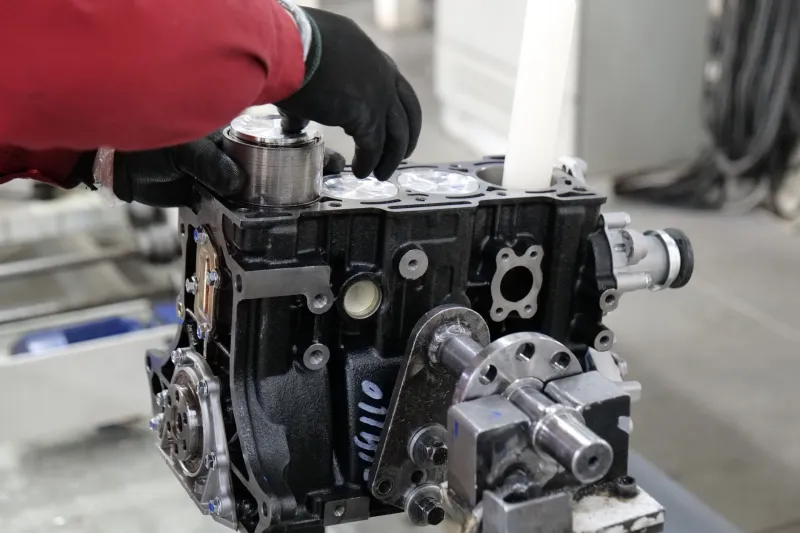
Wet-liner sealing has a habit of becoming the last job on a long rebuild. The liners are in, the pistons are ready, and someone reaches for whatever tube is nearest the kettle. That is usually where the trouble starts. Not because the sealant is bad, but because the wrong chemistry has been asked to do the wrong job in a cold British workshop.
This is not another post-mortem on coolant weeping. It is a selection guide. The aim is to choose a sealant and O-ring combination that suits the block, the coolant, the gap and the temperature your workshop actually sees in February.
Start With the Joint, Not the Tube Colour
Wet-liner sealants fall into a few broad families, and each wants a different kind of joint.
Anaerobic flange sealants are the rigid, metal-to-metal option. They stay liquid while air is present and cure when the joint is assembled and oxygen is excluded. They work well on clean, flat surfaces with a tight gap, and they resist glycol coolants nicely once fully cured. They are less forgiving on pitted grooves, generous clearances or surfaces that have been smeared with oil. In a cold workshop, anaerobic products can be painfully slow unless you use an activator and keep the block warm.
Silicone sealants, usually RTV types, are the flexible gap-fillers. They cope with minor surface imperfections and can be useful where the liner seat or groove is not perfect. But silicone is not a universal answer. Some formulations are not ideal around glycol, some are acetic-cure and can be aggressive to certain metals, and many are easy to over-apply. A fat bead of silicone that squeezes into a coolant passage is a classic way to create a restriction that looks like a seal failure later.
Proprietary liner sealants and OEM-specified compounds sit somewhere in between. They are often designed for a particular engine family, with a stated cure profile and a known relationship to the O-ring material. If the manufacturer says use a specific product, that is not marketing fluff. It is usually the cheapest insurance you will buy all rebuild.
The O-Ring Is Half the Decision
You cannot choose the sealant in isolation. Wet liners often rely on an O-ring or a seal ring to do the primary sealing, with the sealant acting as a secondary barrier or joint filler. The elastomer has to be compatible with the coolant, not just the sealant.
Nitrile is common and works well in many applications, but it is not the best choice for every modern coolant mix. Viton and EPDM appear in various liner kits, and they behave differently when exposed to glycol, inhibitors and heat cycles. A sealant that is perfectly happy with glycol will not rescue an O-ring that swells or hardens in it.
Check the kit against the coolant specification. If the engine is running an OAT or hybrid organic acid coolant, do not assume the O-ring in a budget gasket set is suitable. Buy from a bearing and seal factor who can confirm the material, or use the OEM part number. A few pounds saved on an unidentified O-ring is a false economy when the block has to come out again.
Cold Workshop Cure: The UK Calendar Problem
Most sealant datasheets are written for a warm, dry, industrial setting. A UK workshop in November is often nearer eight degrees than twenty, with damp air and a block that has just come in from a cold delivery bay.
Anaerobic sealants cure more slowly as temperature drops. Some will eventually go off, but the window between assembly and coolant fill becomes longer and less predictable. If you are building in winter, bring the block and the sealant up to a sensible temperature before assembly. Use the activator that matches the product, and do not pressure-test the moment the torque wrench clicks.
Silicone is also temperature-sensitive. Moisture-cure silicones need humidity to cure, but a cold, damp workshop can produce a skin over a still-soft core. That is not a seal. It is a trap. Follow the stated cure time at the stated temperature, and add margin if your workshop is cold. A warm, dry area overnight is better than a hopeful cup of tea and an early coolant fill.
Seasonal swings matter too. A joint assembled in a cold snap and filled with cold coolant will see different expansion behaviour than one built in July. That is not a reason to avoid liner work in winter. It is a reason to be deliberate about cure and torque, and to avoid rushing the first heat cycle.
Surface Prep Decides More Than the Brand
No sealant can compensate for a contaminated surface. The liner seat, groove and block face need to be clean, dry and free from old sealant, oil, coolant residue and machining debris. Use a lint-free cloth and a suitable cleaner, then let the surface flash off properly. Do not spray cleaner on and immediately smear sealant over the wet patch.
For anaerobic products, bare metal is the ideal. Oil or grease can stop the cure. For silicones, the surface should be dry and dust-free, and any old silicone needs to be removed completely. A plastic scraper and a gentle abrasive pad are usually safer than a wire wheel on a liner seat.
Check the groove for pitting and burrs. A raised burr can hold the liner off its seat, and a pitted groove can give the sealant nothing to grip. If the groove is rough, sort it out before the tube comes out. This is the point where a five-minute inspection saves a five-hour strip-down.
Bead Placement and Torque Discipline
With a flexible sealant, a continuous bead is usually better than a patchwork of dabs. Keep it on the sealing face, not in the coolant passage. Around coolant holes, leave the passage clear and let the sealant form a ring around it. More is not better. Excess sealant has to go somewhere, and that somewhere is often an oil gallery or a coolant channel.
With anaerobic flange sealants, a thin, even film is usually what the manufacturer wants. Read the instructions for the product rather than copying a habit from another engine. Some anaerobic sealants need an activator on one or both surfaces; others do not. Mixing routines from two different products is how a simple job becomes a mystery.
Torque the liner hold-down or head in the correct sequence and in stages. Sealant does not change the fact that the liner needs to sit square and stable. If the liner is cocked, the bead will not save it. If the torque sequence is wrong, the sealant will be blamed for a mechanical problem.
Failure Modes That Point Back to Selection
When a wet-liner joint weeps, the sealant is often the first suspect and the last thing that was actually wrong. But selection does cause specific failures. A rigid anaerobic product in a loose, pitted joint can fail because it cannot fill the gap. A silicone chosen for convenience can soften or swell in the wrong coolant. An over-applied bead can break off and block a passage. An under-cured joint can weep at the first cold start.
Those are selection and process failures, not mysterious engine behaviour. The fix is to match the product to the joint, the coolant and the workshop conditions, then give it the cure time it asks for.
A Sensible UK Buying List
For a typical wet-liner rebuild, a workshop might keep a known anaerobic flange sealant, a glycol-resistant RTV or proprietary liner sealant, the correct activator, lint-free wipes, a plastic scraper and a sealant-friendly applicator. Motor factors, industrial suppliers and specialist engine shops all carry suitable products, but availability varies. Buy the product you have data for, not the one that happens to be on the counter.
For O-rings, use a seal factor or OEM supplier who can confirm material compatibility. If you are unsure, ask. A quick question about nitrile versus Viton versus EPDM is cheaper than a second rebuild.
The seal of approval is not a brand name on a tube. It is a clean joint, the right chemistry, a compatible O-ring and enough patience to let the stuff cure before the coolant goes in. Do that, and the British year is a lot less likely to find a way past your liner seals.