Interference Without Incident: A Dry-Liner Fitting Routine for UK Workshops

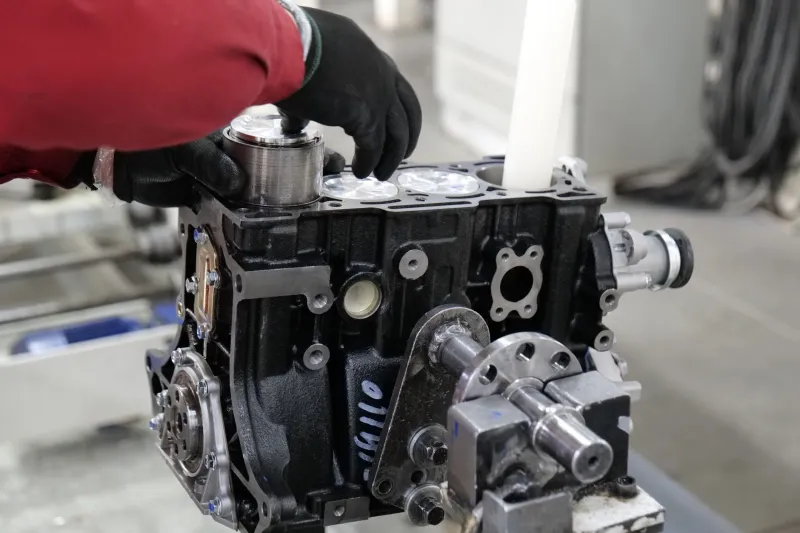
Photo by Photo by Zoshua Colah on Unsplash on Unsplash
Dry liners have a reputation for being the simple option. No coolant seals, no wet-liner drama, just a sleeve pressed into a bore. In practice, that reputation is only half true. A dry liner is simple when the interference fit is treated as a thermal process, not a pressing contest.
The fit is a number, not a feeling
A dry liner does not just slide into a hole. It is held by interference: the liner is slightly larger than the bore it is going into, and the block grips it once everything returns to normal temperature. Get that number right and the liner stays put, transfers heat and keeps the bore stable. Get it wrong and you either create a sleeve that can move or a block that has been asked to swallow something it cannot comfortably take.
The exact interference figure belongs to the engine manufacturer, not to a forum post. Depending on the engine, you might see numbers in the thousandths of an inch or hundredths of a millimetre. A ballpark figure such as 0.025 to 0.075 mm is a conversation starter, not a specification. If you are working without the manual, stop and find the manual. The liner supplier should also have a view. Write the number down before anything gets hot.
Why heat moves more than the bore
When you heat an engine block, the bore grows. When you chill a liner, the liner shrinks. That is the whole trick. The complication is that aluminium and cast iron do not expand at the same rate. Aluminium moves roughly twice as much as cast iron for the same temperature change, which is useful when you are trying to create clearance, but it also means an unevenly heated block will distort unevenly.
A hot spot on one side of the block is not a shortcut. It is a way to turn a round bore into a pear-shaped one before the liner has even arrived. A heat gun waved at the deck, a hot plate under one corner or a flame played around the top of the bore can all create local growth. The block does not need to be hot. It needs to be even. That distinction is where a lot of home-built thermal fits go wrong.
Heat the block, chill the sleeve, or both?
Most workshops heat the block. Some also chill the liner. Both can work, but both need control.
If you are heating the block, use an oven, a controlled heating cabinet or an induction heater designed for the job. Follow the manufacturer's maximum temperature. If the manual says 120°C, treat 120°C as a ceiling, not as a starting suggestion. Give the block time to soak so the temperature is consistent through the casting rather than just skin-deep. A thermocouple or a reliable oven thermometer is worth more here than experience and a hand on the casting.
If you are chilling the liner, a freezer is gentler than dry ice and usually enough when combined with a warm block. Dry ice can create more clearance, but it also demands gloves, ventilation and a healthy respect for what happens when cold metal meets damp workshop air. A chilled liner in a UK winter will sweat like a pint glass. Wipe it, keep it dry and do not let condensation sit in a freshly honed bore.
The press is not automatically the safer answer. A hydraulic press can shove a cocked liner through a tight bore and shave aluminium from the deck without complaining. Force hides misalignment. If the liner needs to be pressed, it should still go in straight, with a proper guide and a smooth, continuous stroke. If it grabs, stop. A liner that stops halfway is telling you something. Listen to it.
Fast fits and slow mistakes
Once the clearances are right, the fit itself should be quick. Have everything ready before the block comes out of the oven: the guide, the orientation marks, the gloves, the clean bench and somewhere for the block to cool evenly. Do not stop halfway to find a hammer.
Line the liner up by hand, check it is square and send it home in one controlled movement. Do not beat it with a mallet. Do not use a drift on the liner face. If it starts to cock, let things cool, remove the liner and find out why. A dry liner that has been forced is a dry liner that has probably taken some of the block with it.
The equalisation window
This is the part that gets skipped. A block pulled from an oven and measured at 40°C is not giving you the number you need. Let the assembly return to a stable room temperature, ideally overnight, in a spot where the temperature is not swinging about. If your workshop is 6°C in February and the block is sitting next to a radiator, your measurements will drift.
Once it is cold, check the liner has not moved. Check the deck height or protrusion if the engine uses it. Check the liner seat is fully home. Then measure the bore properly: top, middle and bottom, in two axes at 90 degrees to each other. A dial bore gauge is the tool for this. If the bore is oval when cold, find out why before the boring bar or hone gets anywhere near it.
Checks before the boring bar
A fresh dry liner can still end up oval if the block was heated unevenly, the liner was cocked on the way in or the seat was not clean. Before machining, verify the basics:
- Bore roundness at multiple heights
- Taper from top to bottom
- Liner protrusion or deck height, where specified
- Deck flatness around the liner edge
- Any signs of scoring, galling or a liner that has shifted
- Cleanliness of the liner seat and block face
If the liner is pre-finished and only needs honing, check that the hone will clean up without taking off too much material. If the liner is semi-finished and will be bored after fitting, make sure there is enough wall thickness to finish to size. Either way, the bore should be checked cold and documented. A measurement you did not write down is a measurement you will argue about later.
A workshop routine worth repeating
- Clean the block and liner seat properly, then measure the bore and liner at room temperature.
- Confirm the interference figure from the manufacturer or liner supplier.
- Heat the block evenly in a controlled way and soak it at the specified temperature.
- Chill the liner only if needed, and keep it dry.
- Fit the liner straight and fully home in one controlled movement.
- Let the block equalise to room temperature overnight.
- Measure roundness, taper and protrusion cold.
- Only then let the boring bar or hone near it.
Thermal fitting is not about being clever with a torch. It is about controlling variables. Heat evenly, chill sensibly, fit straight and check cold. Do that, and the liner goes in without turning a good bore into a bad memory.