The Words That Add Zeroes: Rebore, Re-Line and Hone Explained
Walk into any UK machine shop and you will hear the same loose language. An owner says the engine just needs a rebore and a hone. A mechanic says it is being re-lined. Someone else reckons the head wants a skim. By the time the job is booked, three people think they have agreed the same scope, and the invoice tells a different story.
This is not nitpicking. In liner and engine rebuilding work, those four words describe very different operations, with different tooling, different setup time and different risks. If the vocabulary is fuzzy, the quote is fuzzy. A fuzzy quote is how a straightforward liner refresh turns into a blocked workshop bay, a missed deadline and a conversation about who pays for the mistake.
What each word actually buys you
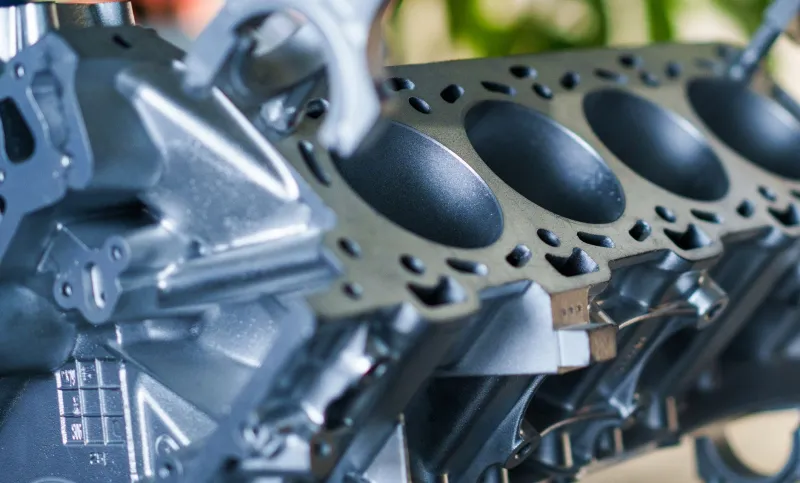
A rebore is a cutting operation. It enlarges an existing cylinder bore, usually to the next piston oversize, or opens a parent block so it can accept liners. On a lined engine, you might bore the parent block for dry liners, machine a counterbore for flanged liners, or bore a newly fitted liner to its final size. The key point is that a rebore removes material and changes the bore diameter. It is not a final finish operation.
A re-line is a liner replacement job. Old liners come out, new ones go in, and the block is machined so the liners sit correctly. That can mean wet liners with seals, dry liners pressed into a parent bore, or flanged liners that need the top step machined accurately. Re-lining is about restoring the cylinder walls with new components. It does not automatically include every subsequent machining step unless the quote says so.
Honing is the final abrasive process. It creates the cross-hatch, sets the surface finish and brings the bore to its final size within a tiny tolerance. A hone is not the tool for correcting a badly tapered bore or removing a deep score. If the bore is out of shape, honing alone will not save it. Honing is also where a lot of liner builds are won or lost, because piston-ring seating depends on the finish being right for the rings and the intended use.
A skim usually means a light machining cut on a cylinder head or block deck to restore flatness. On a liner engine, the deck is not just a flat surface; it is part of the liner protrusion story. Skimming a head and skimming a block deck are not the same job, and neither is the same as setting liner heights. If someone says the block needs a skim, ask which surface and why.
Why the muddle costs money
The classic problem is a quote that sounds comprehensive but is not. An owner asks for a rebore, expecting new liners, final honing and a deck check. The machinist quotes a bore only. The liners are extra. The final hone is extra. The torque plate setup is extra. The deck skim is extra. None of this is dishonest, but it is a recipe for a budget that grows after the block is already in the shop.
The reverse also happens. Someone asks for a hone when the bore is oval, tapered or corroded. The machinist hones what is there, the piston clearance ends up wrong, and the rebuild starts life with poor ring seal. Or a head gets skimmed when the real issue is a warped block deck or incorrect liner protrusion. The engine goes back together with the same fault and a lighter wallet.
Liner work is especially sensitive because the liner is often the interface between the block, the head gasket and the cooling system. A quote that does not state whether liners are supplied, fitted, bored and finish-honed is not a quote you can compare with another. It is just a number.
Questions to ask before booking liner work
Before you commit, get the scope in writing. These questions are not awkward; they are the difference between a build and a saga.
- What have you measured, and what were the readings? Bore wear, taper, ovality, deck flatness and liner protrusion should be numbers, not vibes.
- Is this a rebore of the original bores, a parent-block bore to accept liners, or a final bore of fitted liners?
- Are the liners included in the price? Are they wet, dry or flanged, and who supplies them?
- Is final honing included, and what finish are you targeting for these rings and this use?
- Will the block be honed with a torque plate? If not, why not?
- Is the deck skim included, and are liner protrusions being set to the head gasket manufacturer's spec?
- Is the cylinder head being pressure tested and skimmed separately, or is that outside the quote?
- Are cleaning, crack testing, core plugs and main-cap checks included?
- What piston-to-bore clearance and ring end gaps are you working to?
- What is excluded, and what happens if the block needs more work once it is stripped?
A quote you can actually compare
Ask for an itemised scope rather than a single lump sum. For a liner build, that might read: strip and clean, crack test, remove old liners, bore parent block, fit new liners, deck block, final bore and hone with torque plate, set liner protrusion, supply parts. For a head, ask for pressure test and skim, not just a service. For a block, say deck and set liner heights, not skim.
Use clear phrases in emails and job cards: rebore to next oversize with matching pistons; re-line and finish-hone; skim head only; deck block and set protrusion. If a word could mean two jobs, spell out which one you mean. That paper trail protects the machinist as much as it protects you.
At Cyl-Liners UK, we would rather answer three boring questions before the boring bar starts than explain later why a good block became a bad story. Clear words do not just make you sound like you know your stuff. They keep the block straight and the budget honest.