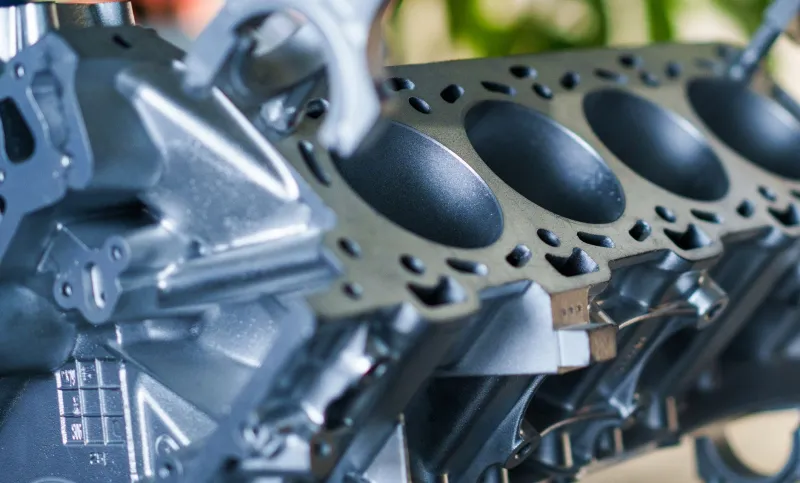
Soft Metal, Hard Truths: Screening Budget Liners Before They Go In
There is a particular kind of silence in a workshop when a freshly rebuilt engine starts breathing heavily after a few thousand miles. The head gasket is fine. The rings were gapped properly. The honing pattern looked textbook. Then the bores are measured and the liner has gone oval, with taper that should not be there on a component that has barely done a season. Often the culprit is not the machinist and not the ring set. It is a liner that was simply too soft from the start.
Budget liner sets are not automatically bad. Plenty of sensible rebuilds use affordable components and live long, happy lives. But the aftermarket is wide, the supply chains are long, and the phrase 'high quality' on a plain cardboard box is not a metallurgical specification. In 2026, with more builders sourcing directly from online marketplaces and specialist importers, a pre-fit screening routine is worth more than a drawer full of optimistic receipts.
Why hardness is the first question, not the last
A cylinder liner has to resist wear from rings, piston side load and combustion pressure while holding a bore shape that the rings can seal against. If the iron is too soft, or if the heat treatment is inconsistent along the length, the bore can lose its roundness quickly. You may see ovality at the top of the bore, taper towards the bottom, or a polished low spot where the ring has been working against a softer patch.
That does not mean every liner needs to be race-grade. It means the liner needs to match the specification for the engine and the use. A mild road engine and a high-load performance build do not ask the same questions of the material. The problem with unknown budget sets is that you often do not know which question you are asking. The box may list a part number, but not a hardness range, a material grade, a batch number or a heat-treatment standard.
Hardness also is not the same as surface finish. A liner can look beautifully honed and still be soft underneath. Equally, a hard liner can be badly machined. The two checks belong together: what the material is, and what shape it is in.
Start with the paperwork before the micrometer
Before any liner goes near a boring bar, read the label like a suspicious MOT tester. A reputable supplier should be able to tell you the material specification, the intended hardness range, the dimensional tolerances, the recommended bore clearance and the honing specification. Batch traceability is not a luxury; it is how you prove that the set you fitted matches the set you were sold.
Warning signs in 2026 include sets with no hardness callout at all, vague fitment lists that cover half the engine family, mixed packaging inside one box, no country of origin, no batch number and no technical data beyond a cheerful claim about quality. A price that is dramatically below every known brand is not proof of a scam, but it is a reason to slow down. So is a supplier who cannot answer a simple question about liner wall thickness or recommended interference fit for a dry liner.
Keep the invoice, the listing, the batch label and any email correspondence. If a liner later fails, that paper trail is often more useful than a verbal assurance that the parts were definitely the right ones.
A hardness map, not a single reading
A portable hardness tester is the practical tool for most workshops. Leeb and UCI instruments are common, and a bench Rockwell tester is even better if you have access to one. The exact method matters less than the discipline: clean the surface, use a known reference block, take several readings and record them.
Do not test one spot and call it done. Take readings at the top, middle and bottom of the liner, and at three or four positions around the circumference. The aim is to find variation as much as absolute hardness. A liner that reads consistently within the specified band is one thing. A liner with a soft patch, a hard skin at the top and a different reading at the bottom is telling you that the heat treatment or casting was not under control.
A file test is not a hardness test. It is a rumour. If you do not have a tester, pay a local metrology lab or a friendly machine shop to run a proper check before you commit to machining. It is far cheaper than stripping an engine later.
Dimensional checks that catch trouble early
Hardness is only half the screening. Measure the bore with a good bore gauge or micrometer at the top, middle and bottom, in two planes at each height. You are looking for ovality, taper and any sign that the liner has moved after casting or rough machining. Check the outside diameter and wall thickness as well. An ultrasonic thickness gauge is useful for spotting wall variation that a micrometer cannot reach without cutting the liner up.
Check the length, flange thickness and seat area on flanged liners. For dry liners, check that the outside diameter and surface finish suit the block. For wet liners, inspect the sealing surfaces and the flange seat. If a liner is out of round before it is fitted, do not assume the hone will save it. Machining can release stress and make a bad liner worse.
Record the numbers. A simple sheet with the batch number, hardness readings and bore measurements is enough. If the set passes, you have a baseline. If it fails, you have evidence.
The bargain-bin tells
Suspiciously cheap liner sets often share a few habits. They arrive with no hardness range, no honing advice and no clearance data. The fitment list is impossibly broad. The liners may be packed with different surface finishes or slight colour differences that suggest mixed batches. The supplier may be keen to sell but vague on metallurgy.
None of that proves the liners are unfit. It does mean you should test before you machine. A liner set that cannot survive a hardness map and a bore check is not a bargain; it is a delay with a invoice attached.
If it goes wrong: warranties and UK rights
When a liner fails, the first question is usually whether anyone will pay. The answer depends on how you bought it. If you bought as a consumer, the Consumer Rights Act 2015 requires goods to be of satisfactory quality, fit for purpose and as described. Remedies can include a repair, replacement, price reduction or rejection, depending on timing and circumstances. If you bought in the course of business, the Consumer Rights Act may not apply in the same way; business-to-business sales can rely on contractual terms and, where relevant, implied terms under the Sale of Goods Act 1979. Those rights can be affected by the contract, so read the terms rather than assuming.
A manufacturer warranty is a separate thing. It may exclude racing use, incorrect fitting, machining errors, coolant problems or failure to follow clearance and hone specifications. That is why the pre-fit record matters. If you machined a liner that was already outside specification, a warranty claim becomes much harder. If you have hardness readings, bore measurements and batch details, you are in a stronger position.
Notify the supplier promptly, keep the failed liner, photograph the bore and the packaging, and do not bin the invoice. A calm paper trail beats a heated phone call.
A routine worth repeating
Screening budget liners is not about being precious. It is about refusing to let an unknown variable into a known build. Check the paperwork, map the hardness, measure the bore and wall, inspect the seats and record the results before machining. If the set passes, fit it with confidence. If it fails, return it before it costs you an engine.