The Wall You Can't See: Sonic Testing Before Liner Work
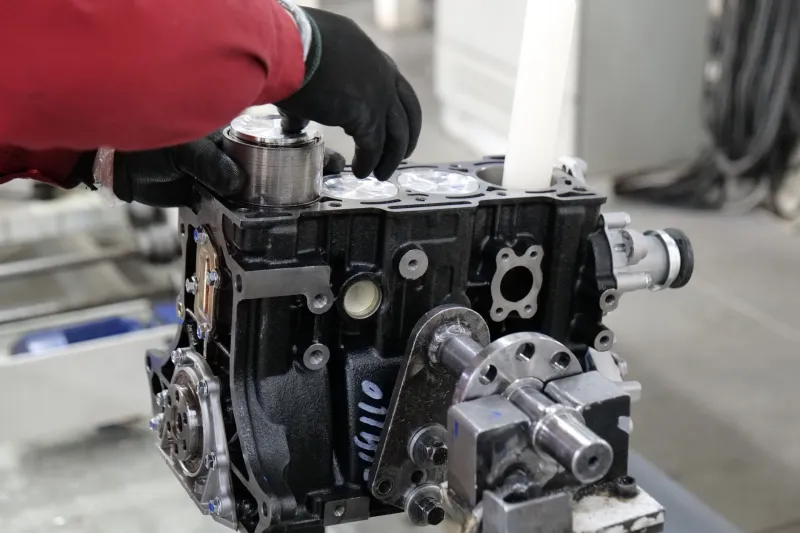
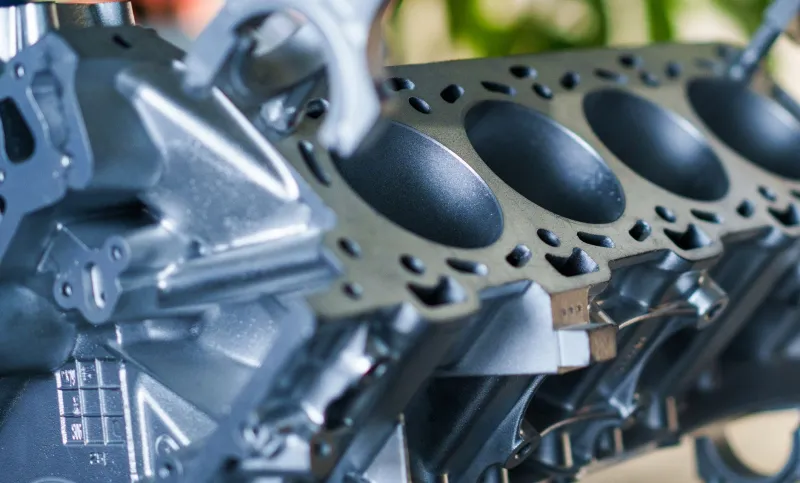
There is a particular silence in a machine shop when a boring bar breaks through a cylinder wall. It is not loud. It is the sound of a quote turning into a paperweight. The bore may have looked fine on the gauge, the hone pattern may have been lovely, and the customer may have already bought pistons. But the casting behind the bore was thinner than anyone guessed.
That is why sonic testing belongs before liner work, not after. Ultrasonic thickness testing — usually just called sonic checking in the trade — gives you a map of the metal you cannot see. On an old UK block with unknown history, that map is often more valuable than another thou of bore clearance.
Why a bore gauge tells half the story
A bore gauge measures the hole. It does not measure the wall behind the hole. That distinction matters when you are opening a block for dry liners, chasing a bigger bore, or repairing a cylinder that has already been taken out close to its limit.
A liner job removes material. Sometimes a lot of it. If you are boring a parent bore to take a dry liner, the cutter does not care where the water jacket is. It will find it eventually. Sonic testing gives you a chance to find it first, on a screen, with the block still salvageable.
The same applies to wet-liner blocks. You may not be boring through to the jacket, but you still want to know how much sound casting surrounds the liner seats and seal areas. Corrosion can eat from the outside in, and a block that looks solid from the deck can be surprisingly thin down by the bottom of the bore.
When to book a sonic pass
Not every hone-and-ring job needs a full ultrasonic survey. If you are refreshing a known block with a light hone and standard pistons, a careful visual check and a bore gauge may be enough. But there are situations where skipping the sonic check is false economy.
Ask for one when the block has unknown history, especially a secondhand buy from an auction site or the back of a shed. Ask when the block is already at or near its maximum overbore. Ask when you are planning forced induction, nitrous, or any build that will put more heat and pressure through the walls. Ask when you are fitting liners to a rare or expensive casting, because a replacement may not exist.
It is also worth insisting on sonic testing if the block has been heavily cleaned, acid dipped, or left standing with water in it. Rust and corrosion do not always announce themselves with a visible pit. Sometimes the damage is a broad thinning on the outside of the casting, hidden behind a core plug or under a layer of paint.
For a UK buyer, a sonic report is also a negotiation tool. If a seller claims a block is 'good for a big bore', a few thickness readings can turn that claim into a conversation. Sometimes you walk away. Sometimes you knock £100 off and build it at a sensible size.
What the numbers are actually saying
There is no single magic number that covers every engine. A tiny air-cooled casting and a big American iron block do not play by the same rules. What matters is the minimum wall thickness, where that minimum sits, and how much material you plan to remove.
On many older cast-iron blocks, you might see readings in the region of 6–8 mm around the thrust faces. That is usually comfortable territory. Once readings start dipping below 4 mm, eyebrows should rise. Below 3 mm, you need a very good reason to keep going, and 'because I already bought the liners' is not one.
But averages are useless here. A block can average 6 mm and still have a 2.8 mm patch on one side of number three bore. Record the minimum, not the mean. Look at the spread around each cylinder: front, back, thrust side, non-thrust side, top, middle and bottom. If one side of the bore is much thinner than the other, you are probably looking at core shift — the casting's internal passages did not sit where the designer intended. Core shift is not automatically fatal, but it changes how much you can safely bore.
Variation of more than a millimetre or so around a single bore is worth discussing with your machinist. More than that, and you should be thinking about whether this block is the right starting point for the build you have in mind.
Core shift, corrosion and the nasty surprises
Core shift is the quiet killer of big-bore plans. The outside of the block looks normal. The bore looks central. But the water jacket is closer to one side than it should be. Boring to the next size may be fine; boring to the size in your head may not be.
Corrosion loss is the other one. A wet-liner block that has spent years with weak antifreeze can have paper-thin casting around the lower seal areas. A dry-liner block that has been sitting outside may have external pitting that never shows up on a bore gauge. Sonic testing will not find every crack, and it will not replace a pressure test or magnetic crack detection. But it will flag areas that deserve a closer look before money changes hands.
How to get a useful test, not just a printout
A sonic check is only as good as the person holding the probe. The block needs to be clean and bare enough to access the walls. The operator should use the right couplant, calibrate the gauge, and take readings from a proper grid rather than stabbing at three random spots.
Ask for a map with readings written against each cylinder, plus photos of where the probe was placed. If the shop just hands you a scrap of paper with 'all good' on it, you have paid for an opinion, not a measurement. A useful report will show the thin spots and the variation, not just a pass-or-fail verdict.
The cheap insurance argument
A sonic test is not free, but it is usually a modest sum next to a set of custom pistons, a liner kit, and a machinist's time. More importantly, it protects the block itself. In 2026, good used castings are not getting easier to find, and some of the interesting ones are already scarce.
Sonic testing will not turn a tired block into a good one. It will not fix core shift or replace missing metal. What it does is stop you spending good money on the wrong casting. Before the boring bar sings, let the block tell you how much wall it actually has. It is a lot cheaper than finding out through the water jacket.